

- Wireless technology Bluetooth

Signal Jamming Detector & Jamming Alarm for Any Alarm Panel, No Wiring
SKU TD-AJV4 Model AJV4
- Detects signal jammers in under 30 seconds and alerts the monitoring center on its own
- No panel connection and no wiring, installs alongside any alarm system in minutes
- Sends the alarm over ultra narrowband or spread spectrum radio built to get through jamming
- Six AA batteries rated for more than four years, with an SOS button and live comfort readings
- Fast shipping from four branches
- 30-day returns on unopened products
Product highlights
- DetectionJamming alarm in under 30 seconds
- RangeUp to 165 ft (50 m)
- ConnectivityLTE-M, NB-IoT, Sigfox, LoRaWAN
- Battery lifeMore than 4 years, 6 x AA
- CompatibilityAny alarm panel, no wiring
- Size5.4 x 3 x 1.1 in
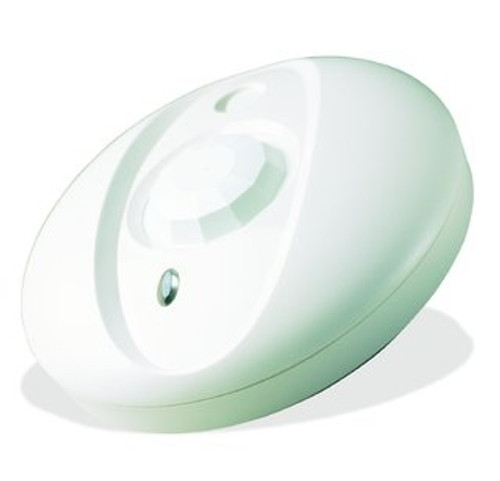
Criminals use signal jammers to cut wireless sensors and cellular communicators off from the panel before a break-in. The Telecom Design AJV4 Jamming Alarm is a standalone signal jamming detector: it listens to the radio spectrum around the property, recognizes a jamming attempt in under 30 seconds, and alerts the monitoring center on its own, without going through the panel. It installs alongside any alarm system in minutes, with no wiring.
What is signal jamming?
A signal jammer is a transmitter that drowns out radio signals so wireless devices cannot communicate. Some target one frequency; others put out wideband noise across many bands. Jammers are illegal, but they are widely used to disable security systems, with documented cases that include high-profile robberies and home invasions.
How does a jamming attack on an alarm system work?
Most alarm systems depend on radio somewhere: wireless door and motion sensors reporting to the panel, and a cellular communicator reporting alarms to the monitoring center. A jammer switched on before entry can stop those signals getting through, so a door opens without the panel hearing it, or the panel goes into alarm with no way to send it out. The panel is the thing under attack, so it cannot be the only thing watching for the attack.
How does the AJV4 detect jamming?
It continuously scans the bands a jammer would attack: cellular, the 915 MHz alarm band, Wi-Fi and Bluetooth. Instead of reacting to a simple loss of signal, Telecom Design's patented detection engine reads the shape of the interference and tells a targeted frequency jammer apart from a wideband noise jammer. The engine is built on more than ten years of research and field data from millions of units in service.
A long-range algorithm identifies commercial jammers before they reach critical proximity, with a monitoring range of up to about 165 ft (50 m), depending on construction. Detection and alarm happen in under 30 seconds.
Does it work with any alarm panel?
Yes. There is no connection to the existing panel or sensors and no wiring for data or power, so nothing in the system you already installed changes and nothing gets reprogrammed. Mount it on the wall, insert six AA batteries, and the cloud connection sets itself up. The batteries are rated for more than four years and are user replaceable, and tamper protection covers both the wall mount and the battery cover.
How does the jamming alert reach the monitoring center?
Once jamming is confirmed, the unit picks the communication path the interference is least able to block. Ultra narrowband (UNB) transmission uses narrow bands with high power density to push through jammer noise, and direct sequence spread spectrum (DSSS) spreads the signal across a wide band so a targeted jammer cannot follow it. Its radios cover the 902 to 928 MHz unlicensed alarm bands and the LTE-M, NB-IoT, BLE, Sigfox and LoRaWAN networks.
The alarm reaches the central station through a cloud-to-cloud API or a standard interface such as SIA or MASterMind, so check which path your monitoring center supports. The device runs on a low-cost connectivity service that includes a cloud dashboard, and it supervises itself with a keep-alive signal and battery level monitoring.
What does the customer see?
The LCD shows protection status, temperature, humidity, indoor air quality, signal and battery, so the protection is visible every day. A one-press SOS button on the front sends a manual alarm.
How to sell it
Most homeowners and business owners have never heard of signal jamming, and plenty of dealers have not either. That is the opening. Start with the customers you already monitor: every wireless system you have sold relies on radio, and this protects it with nothing to reprogram at the panel. It also adds a recurring service line, since the alarm reports through a cloud interface to the monitoring center.
Offer a jamming consult as part of your next security walk-through. High-value homes, jewelry stores, cannabis facilities, warehouses, remote or unmanned sites and executive residences are the first calls to make, along with any customer asking about the jamming attacks in the news.
AJV4 units purchased in 2026 come with a free press release kit, so you can tell your local market that your company now detects signal jamming.
Specifications
| SKU | TD-AJV4 |
|---|---|
| Brand | Telecom Design |
| Form factor | Standalone wall-mount jamming detector with LCD |
| Communication | Cellular |
| Communication | Bluetooth |
| Power input | 6 x AA alkaline batteries (not included) |
| Compatibility notes | No connection to the existing panel or sensors required; works alongside any security system |
| Communication notes | LTE-M, NB-IoT, BLE, Sigfox, LoRaWAN; ultra narrowband (UNB) and direct sequence spread spectrum (DSSS) transmission |
| Alarm band | RF unlicensed alarm bands, 902 to 928 MHz |
| Bands monitored | Cellular, 915 MHz alarm band, Wi-Fi, Bluetooth |
| Detection method | AI and machine learning engine scanning an extended radio spectrum, with countermeasures |
| Detection and alarm time | Under 30 seconds |
| Range | Up to approx. 165 ft (50 m), depending on construction |
| Threat analysis | Differentiates targeted frequency jammers from wideband noise jammers and selects the bypass strategy to match |
| Sensitivity | Long-range algorithm identifies commercial jammers before they reach critical proximity |
| Monitoring center interface | Cloud-to-cloud API, or a standard interface such as SIA or MASterMind |
| Service | Low-cost connectivity and cloud dashboard |
| Supervision | Keep-alive signal, battery level monitoring |
| Wiring | None, for data or power |
| Mounting | Wall mount |
| Tamper | Wall and battery cover |
| Manual alarm | SOS button |
| Battery life | More than 4 years |
| Battery replacement | User replaceable |
| Power consumption | Ultra low power |
| Environmental sensing | Temperature, humidity, air quality |
| Display | LCD showing protection status, readings, signal and battery |
| Dimensions | 5.4 x 3 x 1.1 in (14 x 7.5 x 3 cm) |
| Weight with batteries | 11 oz (300 g); 6 oz (163 g) without batteries |
| Operating temp | 14°F to 122°F (-10°C to 50°C) |
| Weather rating | IP4X |
| Compliance | FCC, ISED |
| Patents | EP3477611, EP3716242, FR3137785, EP4521376, US19/515,122, FR3161500, WO2025/223818, FR2507938, US19/552,031 |
Documents and resources
FAQs
Can a burglar jam my alarm system?
What is a signal jammer?
Does the AJV4 need to connect to my alarm panel?
How fast does it detect jamming?
Does the AJV4 stop the jammer?
Will a weak cell signal set off a jamming alarm?
How does the alarm get out if the jammer is blocking cellular?
How does the monitoring center receive AJV4 alarms?
What powers the AJV4 and how long do the batteries last?
Does the AJV4 need a connectivity service?
From the blog
Articles and episodes that feature this product
More in Intrusion
All Intrusion-
Edwards Signaling
Edwards Signaling | Transformer Fire Alarm Panel 120Vac To 26.4Vac 4.25A | 2490027
EDS-2490027 -
Kidde Commercial
Kidde | Protective Wire Guard Cage for Ceiling-Mount Fire Alarm Detectors | 3000-202
KD-3000-202