


- Wireless technology Wi-Fi

BE19000 Tri-Band Wi-Fi 7 XGS-PON Router with 10GbE WAN and LAN, 3 x 2.5G Ports and Phone Port
SKU TPL-XGB835v Model XGB835v
- Tri-band Wi-Fi 7 router with a built-in XGS-PON port for 10G symmetrical fiber
- One 10 GbE WAN port, one 10 GbE LAN port and three 2.5 GbE LAN ports
- One phone port for VoIP calls and a USB 3.0 Type-A port on the same unit
- BE19000 Wi-Fi 7 with 320 MHz on 6 GHz, MLO, Multi-RU and EasyMesh support
- Fast shipping from four branches
- 30-day returns on unopened products
Product highlights
- ConnectivityBE19000 Wi-Fi 7, XGS-PON
- Ports2 x 10GbE, 3 x 2.5GbE, 1 phone
- Power12V/4.5A DC
- Size7.8 x 3.1 x 9.4 in
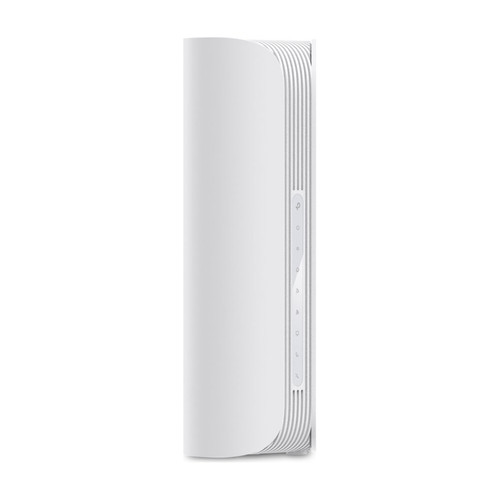
The XGB835v is a BE19000 tri-band Wi-Fi 7 router with a built-in XGS-PON port, so it replaces a separate ONT and router on a 10G symmetrical fiber service. It is built for service-provider rollouts and installers who deploy fiber to the home or small office.
Built for XGS-PON fiber installs
The XGS-PON port runs 10G symmetrical. Wired connections include a 10 GbE WAN port, a 10 GbE LAN port and three 2.5 GbE LAN ports, plus a phone port for VoIP and a USB 3.0 Type-A port. Wi-Fi 7 delivers up to 11520 Mbps on 6 GHz, 5760 Mbps on 5 GHz and 1376 Mbps on 2.4 GHz with MLO, Multi-RU, 4K-QAM and EasyMesh. Providers manage it with OMCI, TR-069, TR-369 and TAUC, and end users use the Aginet app.
Key features
- XGS-PON uplink: 10G symmetrical fiber with OMCI provisioning
- BE19000 tri-band Wi-Fi 7: up to 11520 Mbps on 6 GHz, 5760 Mbps on 5 GHz, MLO
- Wired ports: 1 x 10 GbE WAN, 1 x 10 GbE LAN, 3 x 2.5 GbE LAN, 1 x USB 3.0
- Phone port: VoIP calls over the internet
- EasyMesh compatible: 802.11k/v/r roaming under one network name
- Optional wall mounting: 12V/4.5A power adapter and fiber lock included
System requirements
An XGS-PON fiber service from the provider. Local management through the web UI or the Aginet app; service providers can manage it with OMCI, TR-069/TR-369 or TAUC.
Specifications
| SKU | TPL-XGB835v |
|---|---|
| Brand | TP-Link |
| Form factor | Tri-band Wi-Fi 7 XGS-PON router, desktop or wall mount |
| Communication | Ethernet / IP |
| Power input | 12V/4.5A external power adapter (included) |
| Wi-Fi standard | Wi-Fi 7 |
| Port speed | 2.5G |
| Port speed | 10G |
| Ethernet ports | 1 x 10 GbE WAN, 1 x 10 GbE LAN, 3 x 2.5 GbE LAN |
| Fiber port | 1 x XGS-PON |
| Phone ports | 1 |
| USB | 1 x USB 3.0 (Type-A) |
| Wireless standards | IEEE 802.11be/ax (6 GHz), 802.11be/ax/ac/n/a (5 GHz), 802.11be/ax/n/g/b (2.4 GHz) |
| Wireless speed | BE19000: up to 11520 Mbps on 6 GHz (EHT320), 5760 Mbps on 5 GHz (EHT160), 1376 Mbps on 2.4 GHz (EHT40) |
| Antennas | 4 x internal 2.4/5 GHz, 4 x internal 6 GHz, 1 x internal 6 GHz receiver, 1 x internal 2.4/5 GHz DFS |
| Wireless security | WPA/WPA2/WPA3 |
| SSIDs | 2 x 6 GHz, 2 x 5 GHz and 2 x 2.4 GHz |
| Mesh | EasyMesh compatible, 802.11k/v/r |
| VPN | Server: PPTP, IPSec, OpenVPN. Pass-through: PPTP, L2TP, IPSec |
| Security | NAT firewall, access control, MAC/IP/URL filtering, IP and MAC binding, DoS, SYN flood and ping of death defense |
| Controller management | Local web UI and Aginet app; OMCI, TR-069, TR-369, TR-098, TR-181, TR-111, TR-143 and TAUC cloud for service providers |
| Communication notes | IPv4/IPv6, hardware QoS, flow classification, NAT, port mapping, static routing, DNS relay, DDNS, IGMP v1/v2/v3, DHCP server and relay |
| Mounting | Desktop or wall (optional) |
| Dimensions | 7.8 x 3.1 x 9.4 in (198 x 80 x 238.2 mm) |
| Operating temp | 32°F to 104°F (0°C to 40°C) |
| Operating humidity | 10 to 90%, non-condensing |
| Package contents | XGB835v unit, RJ45 Ethernet cable, power adapter, fiber lock, quick installation guide |
FAQs
Does the XGB835v replace the ONT?
Does it work on GPON or other fiber?
What are the wired port speeds?
Does it have a phone port?
Is it managed by Omada?
More in Hubs, Routers & Switches
All Hubs, Routers & Switches-
TP-Link
TP-Link | BE9700 Tri-Band Wi-Fi 7 Router with 10G WAN, 2.5G LAN and USB 3.0 | Archer BE550 Pro
TPL-Archer BE550 Pro -
TP-Link
TP-Link | AXE5400 Tri-Band Wi-Fi 6E Router with 2.5G Port, HomeShield and EasyMesh | Archer AXE75
TPL-Archer AXE75