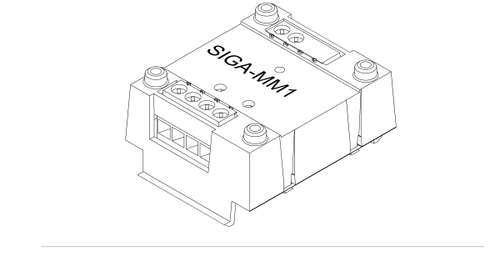



Combination Waterflow/Tamper Module. Two Circuit Input Module For Use With Normally Open Contact Devices. The First Circuit Is Factory Programmed To Latch As An Alarm After A Contact Closure Of 16 Sec
SKU KD-GSA-WTM
- Fast shipping from four branches
- 30-day returns on unopened products
The GSA-WTM gives one module two dedicated dry-contact inputs for waterflow and tamper monitoring, with the waterflow circuit factory-programmed to latch an alarm only after a sustained 16-second contact closure so a pressure surge doesn't trip a false alarm.
Built for the commercial fire installer
Like every module in Kidde's intelligent addressable line, the WTM sets its loop address with simple rotary switches, and its ground-fault detection pinpoints the exact module with the wiring problem instead of leaving you tracing wire back to the panel. Because the module makes its own alarm decisions on-board, existing conventional wiring usually works without a rewire.
Key features
- 16-second contact closure delay on the waterflow circuit rejects surge-related false alarms
- Dedicated tamper input supervises valve tamper switches on the same module
- Ground fault detection isolates the wiring problem to this specific module
- Rotary switch addressing — no separate programming tool required in the field
- Bicolor status LED for at-a-glance normal/active indication
- Runs on existing wiring in most retrofit and upgrade jobs
Compatibility
Kidde intelligent addressable fire alarm systems using analog addressable loop wiring.
Specifications
| SKU | KD-GSA-WTM |
|---|---|
| Brand | Kidde Commercial |
| Form factor | Two-circuit analog addressable input module |
| Inputs | Waterflow (16-sec alarm delay) + tamper, dry contact |
| Addressing | Field rotary switches |
| Wiring | Class B, existing conventional wiring compatible |
| Indicators | Bicolor status LED |
Documents and resources
FAQs
Why does the waterflow circuit have a 16-second delay?
Can I use existing wiring with the GSA-WTM?
How is the module addressed on the loop?
What does the ground fault detection do?
More in Kidde Commercial
All Kidde Commercial-
Kidde Commercial
Kidde | Analog Addressable Dual Input Module, UIO Mount, Class B Circuit | GSA-MCT2
KD-GSA-MCT2 -
Kidde Commercial
Kidde | Universal Input/Output Module Motherboard - 6 Position. Use For M Series Modules | GSA-UIO6
KD-GSA-UIO6