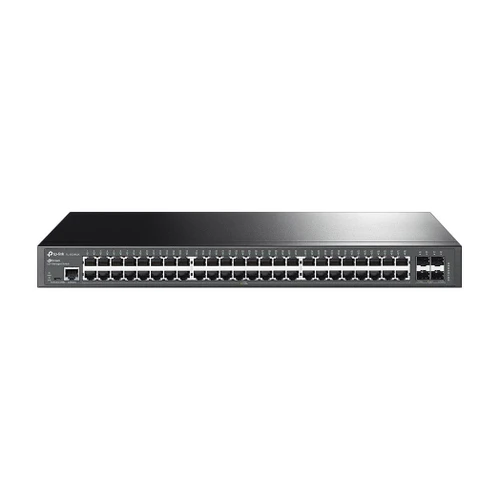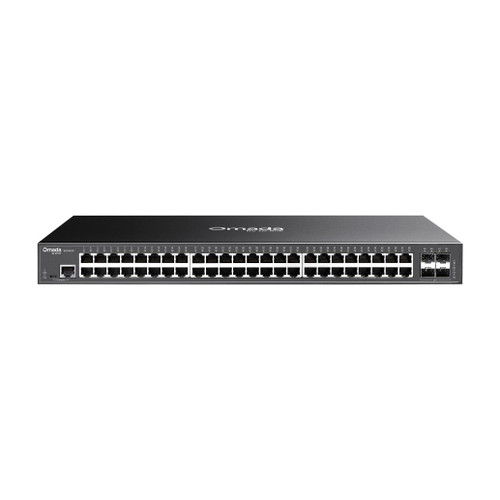




Omada Aggregation 24-Port Gigabit SFP L2+ Managed Switch with 4 Combo Ports and 4 10G SFP+ Slots
SKU TPL-SG3428XF Model SG3428XF
- 20 Gigabit SFP slots plus 4 combo SFP/RJ45 ports for fiber and copper access links
- Four 10G SFP+ slots for uplinks to the core
- 1+1 redundant internal power supply keeps the switch up if one supply fails
- L2+ static routing, 4K VLANs, ACLs and 802.1X, managed in Omada or standalone
- Fast shipping from four branches
- 30-day returns on unopened products
Product highlights
- Ports24 x SFP, 4 x SFP+
- ConnectivityL2+ managed, Omada
- Power1+1 redundant, internal
- Mount19-inch rack
- Size17.3 x 8.7 x 1.7 in
The Omada SG3428XF is a 24-port Gigabit SFP L2+ managed aggregation switch with four combo SFP/RJ45 ports and four 10G SFP+ uplinks, built for fiber-fed access closets and building aggregation. A 1+1 redundant internal power supply keeps it running through a supply failure.
Built for fiber aggregation
Twenty SFP slots and four combo ports let you mix fiber and copper drops, while four 10G SFP+ slots carry the uplink to the core. Static routing, 802.1Q VLANs, QinQ, ACLs, 802.1X and IGMP snooping cover segmentation. Manage it from an Omada controller or standalone through the web UI, CLI and SNMP.
Key features
- 24 Gigabit SFP-based ports: 20 SFP slots plus 4 combo SFP/RJ45 ports
- Four 10G SFP+ slots: uplinks to the core or between buildings
- 1+1 redundant power: built-in dual power supply
- L2+ features: static routing, DHCP server, VLANs, QinQ, ACLs and ERPS
- Zero-touch provisioning: through the Omada Cloud-Based Controller
- Rackmount case: rackmount kit and rubber feet included
System requirements
Centralized management needs an Omada Cloud-Based Controller (built-in version 5.15.22 or later), or an Omada hardware or software controller (5.15.20 or later); zero-touch provisioning needs the cloud-based controller. Without a controller the switch runs standalone from its web interface and CLI.
Specifications
| SKU | TPL-SG3428XF |
|---|---|
| Brand | TP-Link |
| Form factor | 24-port Gigabit SFP L2+ managed aggregation switch with 4 SFP+ slots, rackmount |
| Communication | Ethernet / IP |
| Power input | 1+1 redundant internal fixed power supply, 100-240V AC, 50/60 Hz |
| Power consumption | 35.7 W max at 110V/60 Hz |
| Management | L2+ Managed |
| Port speed | Gigabit |
| Port speed | 10G |
| Works with | Omada |
| Ethernet ports | 4 x Gigabit RJ45 (combo with SFP) |
| SFP slots | 20 x Gigabit SFP, 4 x Gigabit SFP/RJ45 combo, 4 x 10G SFP+ |
| Console ports | 1 x RJ45, 1 x Micro-USB |
| Switching capacity | 128 Gbps |
| Packet forwarding rate | 95.23 Mpps |
| MAC address table | 16K |
| Jumbo frame | 9 KB |
| VLANs | 4K 802.1Q VLANs, MAC, protocol, private and voice VLAN, QinQ, GVRP |
| L2+ features | 48 IPv4/IPv6 static routes, DHCP server and relay, link aggregation, STP, ERPS, loopback detection, port mirroring |
| Security | 802.1X with RADIUS and TACACS+ AAA, ACLs, DHCP snooping, ARP inspection, port security, storm control, DoS defend, HTTPS and SSH management |
| Controller management | Omada Cloud-Based (v5.15.22+), hardware or Software Controller (v5.15.20+); Omada app |
| Communication notes | Web GUI, CLI via console and Telnet, SNMP v1/v2c/v3, RMON, LLDP/LLDP-MED, IPv6, dual image and dual configuration |
| Cooling | 1 fan |
| Mounting | 19-inch rack (rackmount kit and rubber feet included) |
| Dimensions | 17.3 x 8.7 x 1.7 in (440 x 220 x 44 mm) |
| Operating temp | 23°F to 113°F (-5°C to 45°C) |
| Operating humidity | 10 to 90% RH, non-condensing |
| Compliance | CE, FCC |
| Package contents | SG3428XF, power cord, console cable, rackmount kit, rubber feet, quick installation guide |