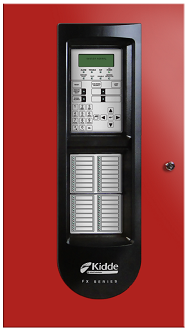



Multi-Protocol BMS Communications Bridge for FX-Series Fire Alarm Panels
SKU KD-SA-FSB
- Fast shipping from four branches
- 30-day returns on unopened products
The SA-FSB bridges the gap between Kidde FX-Series intelligent fire alarm control panels and building management systems. It converts the panel's RS-232 printer port output into BACnet IP, BACnet MS/TP, Modbus TCP, or Modbus RTU - whichever protocol the BMS speaks - so fire system status integrates into the facility's existing monitoring infrastructure without custom middleware.
Built for the commercial installer
Powered directly from the fire alarm panel's 24 VDC supply (9-30 VDC input range), the SA-FSB eliminates the need for a separate power source at the bridge. It supports up to 3,600 programmable points per bridge and connects via RS-232 on the panel side and Ethernet 10/100 Base-T or RS-485 serial on the BMS side. BTL certified for BACnet interoperability. CE and FCC compliant. One bridge per FX-64 or FX-1000 panel.
Key features
- Four BMS protocols supported: BACnet IP, BACnet MS/TP, Modbus TCP (default), and Modbus RTU - select during software configuration
- Up to 3,600 programmable points for comprehensive fire system status reporting to the BMS
- Panel-powered operation from the existing 24 VDC supply - no additional power runs required
- Dual BMS connectivity: Ethernet 10/100 Base-T or RS-485 serial with auto-sensing
- BTL certified for verified BACnet protocol compliance and interoperability
- Compact form factor mounts inside the MFC-A enclosure using the FSB-BRKT2 bracket kit
System requirements
Compatible with the Kidde FX-64 and FX-1000 intelligent fire alarm control panels. Mounts inside the MFC-A enclosure using the FSB-BRKT2 mounting bracket (ordered separately). Maximum cable distance between the SA-FSB and the control panel is 50 feet. One bridge per panel.
Specifications
| SKU | KD-SA-FSB |
|---|---|
| Brand | Kidde Commercial |
| Form factor | FieldServer Serial-Ethernet ProtoNode, light grey metal enclosure with mounting ears |
| Communication | RS-232 to fire panel (via SA-232 module); Ethernet 10/100 Base-T or RS-485 serial to BMS (auto-sensing) |
| Supported protocols | BACnet IP, BACnet MS/TP, Modbus TCP (default), Modbus RTU |
| Points per bridge | 3,600 max (combination of incoming and outgoing) |
| Power input | 9 to 30 VDC (from panel power supply) |
| Power consumption | 110 mA nominal, 120 mA max (at 24 VDC) |
| Operating temp | 32°F to 120°F (0°C to 49°C) |
| Operating humidity | 5-90% RH, non-condensing |
| Compliance | CE (EN 55022, EN 55024), FCC Part 15, UL916 (TUV Rheinland Mark) |
| Surge suppression | EN61000-4-2 ESD, EN61000-4-3 EMC, EN61000-4-4 EFT |
| Compatible panels | Kidde FX-64, FX-1000 |
| Maximum bridges | One per panel |
| Maximum cable distance | 50 ft (panel to bridge) |
| Mounting | Inside MFC-A enclosure using FSB-BRKT2 bracket kit (ordered separately) |
| Dimensions | 3.6 x 5.0 x 1.6 in. (8.2 x 11.5 x 4.0 cm) |
| Ship weight | 3.0 lb (1.36 kg) |
Documents and resources
FAQs
What fire alarm panels does the SA-FSB work with?
What BMS protocols does the SA-FSB support?
How is the SA-FSB powered?
How many data points can the SA-FSB handle?
What mounting hardware is needed for the SA-FSB?
Is the SA-FSB BTL certified for BACnet?
More in Kidde Commercial
All Kidde Commercial-
Kidde Commercial
Kidde | Analog Addressable NAC Output Module for FX-Series Fire Alarm Panels | FX-NAC
KD-FX-NAC -
Kidde Commercial
Kidde | Analog Addressable Dual Input Module for FX Series Fire Alarm Panels | FX-IDC2B
KD-FX-IDC2B -
Kidde Commercial
Kidde | Analog Addressable Class A Single Input Module for FX Series Fire Alarm Panels | FX-IDC1A
KD-FX-IDC1A -
Kidde Commercial
Kidde | FX Series Intelligent Addressable Fire Alarm Control Panel, Four-Loop 1,000-Point (Red) | FX-1000
KD-FX-1000