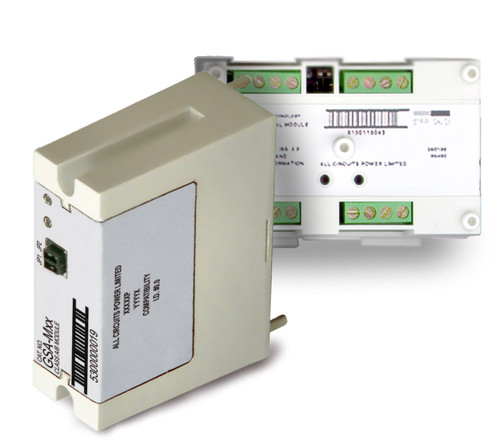



Analog Addressable Dual Input Module for FX Series Fire Alarm Panels
SKU KD-FX-IDC2B
- Fast shipping from four branches
- 30-day returns on unopened products
The FX-IDC2B connects two normally open initiating device circuits to a Kidde FX Series fire alarm control panel on a single SLC address pair. Class B wiring, rotary addressing, and slide-switch preset for alarm or supervisory operation - one module handles two zones without doubling your device count on the loop.
Built for the commercial fire alarm installer
Mounts in a standard North American 4-inch square box (2-1/2 in. deep 2-gang or 1-1/2 in. deep standard). Rotary TENS and ONES switches set the address with a screwdriver - no laptop required for basic commissioning. The module uses two consecutive SLC addresses (second auto-assigned), so plan your address map accordingly. Compatible with Kidde FX Series 64-point and 1000-point control panels. UL listed.
Key advantages
- Two IDC circuits per module: monitor two zones from one SLC address pair, reducing module count and wiring runs
- Rotary address switches: set addresses 01-63 (64-point panel) or 01-126 (1000-point panel) with a screwdriver
- Slide-switch preset: configure for alarm or supervisory without front panel programming
- Ground fault detection: pinpoints the specific module where a wiring fault occurred, cutting troubleshooting time
- Bicolor LED status: flashing green for normal, flashing red for active - visible confirmation at the device
- Standard box mounting: fits 4 in. square x 2-1/2 in. deep 2-gang box or standard 4 in. square box 1-1/2 in. deep
System requirements
Requires a Kidde FX Series intelligent fire alarm control panel. Communicates over the SLC loop at 20V peak-to-peak maximum. Wire with 12, 14, 16, or 18 AWG (16 and 18 AWG preferred). Each IDC circuit requires a 47 k end-of-line resistor (P/N: EOL-47) for Class B operation.
Specifications
| SKU | KD-FX-IDC2B |
|---|---|
| Brand | Kidde Commercial |
| Form factor | Analog addressable dual input module |
| Communication | SLC loop, 20V peak-to-peak maximum |
| Current draw | Standby 550 μA, Activated 725 μA |
| Ground fault impedance | 10 kΩ |
| Operating temp | 32 to 120°F (0 to 49°C) |
| Operating humidity | 0 to 93% RH, noncondensing at 90°F (32°C) |
| Storage temp | -4 to 140°F (-20 to 60°C) |
| Mounting | 4 in. square x 2-1/2 in. deep 2-gang box or standard 4 in. square box 1-1/2 in. deep |
| Wire size | 12, 14, 16, or 18 AWG (16 and 18 preferred) |
| Device address range | 01-63 (64-point panel), 01-126 (1000-point panel) |
| IDC circuit type | Class B, normally open dry contact |
| EOL resistor | 47 kΩ (P/N: EOL-47) |
| Max circuit resistance | 50 Ω (25 Ω per wire) |
| Max circuit capacitance | 0.1 μF |
| LED indicators | Bicolor - flashing green (normal), flashing red (active) |
| Compliance | UL listed |
| Compatibility | Kidde FX Series intelligent fire alarm control panels |
Documents and resources
FAQs
How many IDC circuits does the FX-IDC2B monitor?
How many SLC addresses does the FX-IDC2B use?
What electrical box does the FX-IDC2B mount in?
What end-of-line resistor does the FX-IDC2B require?
What panels is the FX-IDC2B compatible with?
Can the FX-IDC2B be set for alarm or supervisory without programming?
More in FX Series
All FX Series-
Kidde Commercial
Kidde | Analog Addressable Class A Single Input Module for FX Series Fire Alarm Panels | FX-IDC1A
KD-FX-IDC1A -
Kidde Commercial
Kidde | Analog Addressable Dual Input Waterflow & Supervisory IDC Module for FX Series Fire Alarm Panels | FX-IDCWS
KD-FX-IDCWS -
Kidde Commercial
Kidde | Analog Addressable NAC Output Module for FX-Series Fire Alarm Panels | FX-NAC
KD-FX-NAC -
Kidde Commercial
Kidde | Analog Addressable Dual Input Riser Module for FX Series Intelligent Fire Alarm Systems | GSA-CC2
KD-GSA-CC2 -
Kidde Commercial
Kidde | Intelligent Analog Addressable Class A Single Input Module for FX Series Fire Alarm Panels | GSA-CT1
KD-GSA-CT1