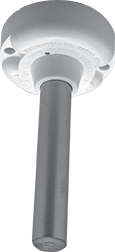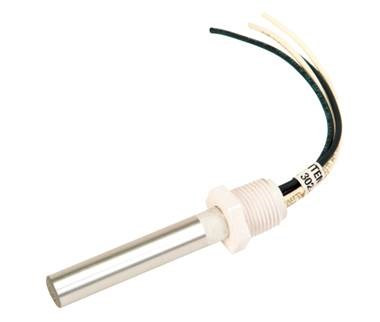



302 Series Rate Compensation Heat Detector, 135F Fixed Temperature, FM & UL Listed, Interior Surface Mount
SKU KD-302-135
- Fast shipping from four branches
- 30-day returns on unopened products
The Kidde 302-135 is a rate compensation heat detector rated at 135F (57.2C) for interior vertical surface mount applications. Rate compensation offsets the thermal lag inherent in conventional fixed-temperature detectors, improving response time on both slow and fast temperature rises without false alarms from normal ambient fluctuations.
Built for the commercial fire alarm installer
FM and UL listed with MEA acceptance, the 302-135 drops into conventional two-wire fire alarm circuits as a normally-open initiating device. Hermetically sealed, shock and corrosion resistant, and tamperproof - built for environments where reliability matters and maintenance access is limited. Self-restoring operation means no truck roll to manually reset after activation; the detector resets automatically once temperatures drop below the rated threshold.
Key features
- Rate compensation design: responds accurately to both slow-building and fast-rising heat events, offsetting the thermal lag that trips up conventional fixed-temperature detectors
- Self-restoring: no manual reset required after activation - contacts open automatically when temperature drops below rated level
- Hermetically sealed construction: shock resistant, corrosion resistant, and tamperproof for low-maintenance installations
- FM and UL listed: 50' x 50' vertical spacing, 40' x 40' horizontal spacing (UL); 30' x 30' (FM) on smooth ceilings up to 10'
- Simple two-wire wiring: normally-open contact ties directly to the conventional fire alarm initiating circuit
- Low maintenance: dust and dirt accumulation does not affect sensor operation
System requirements
Connects to any conventional fire alarm control panel via standard two-wire initiating circuit with end-of-line resistor. For interior mounting in environments where ambient ceiling temperature does not exceed 100F (38C). Optional AP-P adapter plate available for mounting to 3" or 4" octagon outlet boxes.
Specifications
| SKU | KD-302-135 |
|---|---|
| Brand | Kidde Commercial |
| Form factor | Interior vertical surface mount heat detector |
| Detection type | Rate compensation, fixed temperature |
| Temperature rating | 135°F (57.2°C) |
| Electrical rating | 6-125 VAC / 5A, 6-25 VDC / 1A, 125 VDC / 0.5A |
| Circuit type | Normally-open, two-wire conventional |
| Operating temp | -40°F (-40°C) minimum ambient |
| Maximum ceiling temp | 100°F (38°C) |
| UL vertical spacing | 50' x 50' (15.2 x 15.2 m) |
| UL horizontal spacing | 40' x 40' (12.2 x 12.2 m) |
| FM spacing | 30' x 30' (9.1 x 9.1 m) |
| Construction | Anodized aluminum shell, fine silver contacts |
| Listings | FM, UL, MEA |
| Mounting | Surface mount; AP-P adapter plate for 3" or 4" octagon outlet box |
| Ship weight | 0.2 lb (0.09 kg) |
Documents and resources
FAQs
What is rate compensation and why does it matter?
Does the 302-135 require manual reset after activation?
What detector spacing should I use?
What wiring does the 302-135 need?
Can this detector be used outdoors?
How do I test this detector?
More in Detectors
All Detectors-
Kidde Commercial
Kidde | 302 Series Rate Compensation All-Weather Heat Detector, 194F Fixed Temperature, FM & UL Listed | 302-AW-194
KD-302-AW-194 -
Kidde Commercial
Kidde | 302 Series All-Weather Rate Compensation Heat Detector - 135F, 1/2" NPT Box Mount, FM & UL | 302-ET-135
KD-302-ET-135 -
Kidde Commercial
Kidde | 302-194 Interior Rate Compensation Heat Detector, Surface Mount, 194°F | 302-194
KD-302-194 -
Kidde Commercial
Kidde | 302-EPM-135 Rate Compensation Heat Detector, Explosionproof Mounting, 135°F | 302-EPM-135
KD-302-EPM-135